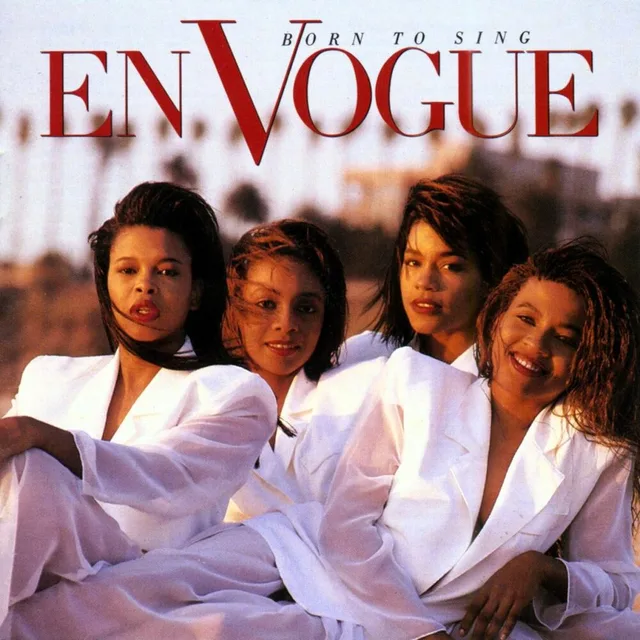
En Vogue - Born to Sing
The album Born to Sing stands as a sonic manifesto, released on April 3, 1990, through Atlantic Records, aiming to blend genres without abandoning its soul heritage. This first studio album by the Oakland-based quartet, formed in 1988 after their involvement in the FM2 project the same year, opens with an iconic track: Party.
A modernist and hybrid sound architecture
This opening track, which topped the album's charts, immediately establishes the group's modernist aesthetic. This is not simply about covers or marginal experiments, but about an architecture created by the duo Denzil Foster and Thomas McElroy, with contributions from Hughie Prince, Don Raye, Marvin Yancy, and Chuck Jackson. This production aims for a strong modern sound, blending soft hip hop soul, pop, early 90s R&B, rap, and new jack swing to achieve a high commercial standard from the outset. The total duration is 51 minutes and 7 seconds.
Grounding new jack swing with "Hold On"
The track Party serves as the initial anchor point for this trajectory. It demonstrates how the group members, initially conceived as a trio by Foster and McElroy before the addition of Terry Ellis, are able to achieve immediate vocal cohesion. This track is not just an intro, but a statement of intent that prepares the listener for an experience that alternates between well-crafted ballads and mid-tempo compositions. The atmosphere is one of unity, where each member is capable of taking the lead on any song, a plan devised by the producers during the 1988 auditions, which saw nearly three thousand women vying for a spot. This solo or collective opening sets the tone for an album that must reconcile the legacy of the Supremes and Martha and the Vandellas with the urgency of the new urban sound.
Debbie T.'s unique contribution to "Lies"
It was on Hold On, the album's first single, that commercial success was firmly established. This track became a hit, charting in both pop and R&B charts, and reaching number 1 on the Hot Dance Music/Club Play charts. The song later reached number 5 in the UK, proving its staying power in European clubs. Hold On firmly establishes soft hip-hop soul in the American charts, providing concrete evidence that Foster and McElroy's vision works perfectly in practice. The vocal performance of the quartet is highlighted as a major strength, capable of competing with pop standards while maintaining an authentic R&B sound that distinguishes the album from more generic productions of the time.
A platinum-selling album and its critics
Within an album where vocal cohesion is paramount, the only external element is Lies feat. Debbie T.. This is the only track on the album to feature a guest artist, a key detail that structures the analysis of the project. Debbie T. appears only on this track, confirmed in the tracklist as an official guest on the title Lies. The second single from the album, Lies, also reached number 1 on the Billboard R&B charts and placed in the top 40 on the pop charts. This is a precise technical collaboration, where the guest serves the song rather than being the main focus, respecting the interchangeable structure designed by the producers.
The commercial success of You Don't Have to Worry
The commercial success of the album also relies on You Don't Have to Worry, the third single from this project. This track also reached number 1 on the Billboard R&B charts, further solidifying the group's dominance in this specific ranking. It is part of a series of hits that allowed the album to be certified platinum by the RIAA. The vocal performances are again praised for their ability to navigate between the emotion of ballads and the energy of upbeat tracks. You Don't Have to Worry illustrates this logic of technical perfection, where each track is designed to maximize commercial appeal, a goal that has been achieved brilliantly despite some variations in vocal performance on other tracks. This is how the group has managed to maintain a high level of quality while exploring different facets of the new urban sound.
The commercial journey of this album concludes with Don't Go, the final single from Born to Sing. This track reached number 3 on the R&B charts, demonstrating that the album retains its strength even in its later releases. Don't Go illustrates the group's ability to create tracks with dance potential while maintaining this soulful identity that characterizes them. This is a track that marks the end of the group's first wave of success, anticipating an evolution towards other projects like Funky Divas.
The album stands out for its strategic position in the group's history, serving as a crucial bridge between their early work and their subsequent monumental successes. It is the first studio album recorded by En Vogue, a group whose very existence was conceived later than their contribution to the FM2 project in 1988. This initial discographic step paved the way for a career that culminated with Funky Divas in 1992, followed by EV3 in 1997, Masterpiece Theatre in 2000, and The Gift of Christmas in 2002, before the more recent era marked by Electric Café in 2018. Atlantic Records quickly recognized the potential of the Oakland-based quartet, transforming an initial trio concept into a quartet after the late audition of Terry Ellis. The construction of this group was based on a precise vision: to create a unit where each member was qualified to lead on any track, blending intelligence and strong vocals in the tradition of the Supremes, but with unprecedented modernity. The tracklist reflects this ambition of sonic architecture, with tracks arranged to maximize commercial impact while exploring a range of genres from soft hip hop soul to new jack swing. The presence of Boogie Woogie Bugle Boy in the fourth position or Time Goes On in the eighth position testifies to this desire to diversify tempos and atmospheres, oscillating between well-constructed ballads and mid-tempo compositions. This musical approach allowed En Vogue to win more MTV Video Music Awards than any other female group in the history of the channel, with a total of seven trophies. Critical reviews confirm this success: while some tracks, such as Just Can't Stay Away and Part of Me, received mixed reviews for their execution, the album as a whole was praised for its immediacy and its ability to serve as a silky antidote to the prevailing gangsta rap scene at the time. The album is framed by two tracks that showcase the diversity of musical choices: Party at the opening and Waitin' on You at the closing. Between these points, some tracks, such as Just Can't Stay Away and Part of Me, were described as flops by Jose F. Promis in his review for AllMusic, despite his overall assessment of the work as a winner. Dennis Hunt of the Los Angeles Times noted that some vocal blends could be grating or dissonant, spoiling some songs despite generally positive reviews. BBC Music's Daryl Easlea also highlighted the immediacy and contagiousness of the album, seeing it as a silky antidote to the prevailing gangsta rap scene in the United States. Kevin Westenberg, a writer for Spin magazine, praised the phenomenal harmonies of the girls, noting that this type of vocal perfection is not often heard. Jan DeKnock of the Chicago Tribune finally pointed out that each voice was clearly audible despite the ups and downs of the project. This nuanced, but overall positive, critical reception confirms that Born to Sing is indeed an album that changes the game in En Vogue's career, transforming a girl group into a platinum icon from its release.
Technical specifications
- Release date: April 3, 1990 - Label: Atlantic Records - Tracks: 12 (51 minutes 07 seconds) - Opening/closing: Party / Waitin' on You - Guest artists: Debbie T. - Previous album: Best Of (1970)
🎬 The album's music videos
12 clips · continuous playback
Tracks
- 1
- 2
- 3
- 4
- 5
- 6
- 7
- 8
- 9
- 10
- 11
- 12
🔥 The tracks that are blowing up
Hip-Hop/R&B ranking · week of 19/10/2026
- 1I Just Might— Bruno Mars
- 2Solar Eclipse— Drake & Don Toliver
- 3Janice STFU— Drake
- 4Quebec— Drake
- 5Dead Fresh— Lil Baby
- 6What You Need— Tems
- 7Cold Shoulder— Drake, Don Toliver & Yebba
- 8So Good— Jhene Aiko Featuring Kendrick Lamar
- 9WTF GOIN— Belly Gang Kushington & 21 Savage
- 10Cinderella— Mac Miller Featuring Ty Dolla $ign