
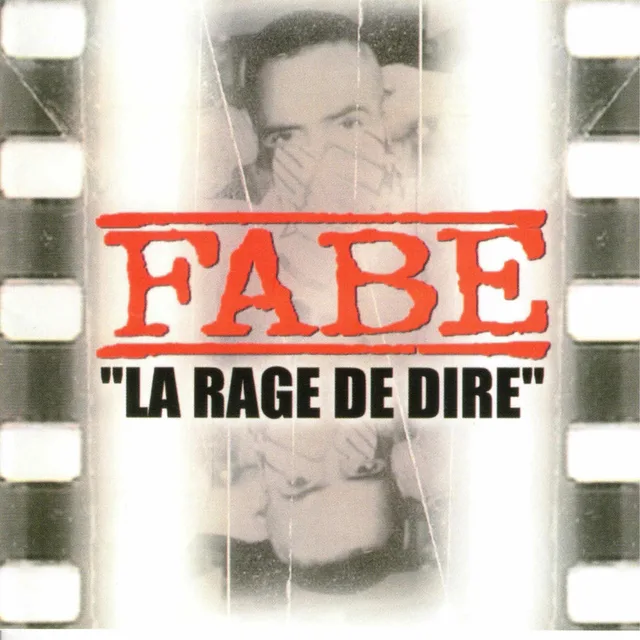
Rage is not here simply anger, but the last breath of a voice that knows silence will follow. In December 2000, Fabe released La Rage de dire as a founding and definitive act: eighteen tracks,
The Intro as Threshold Before Final Withdrawal
The album opens with "Intro," track one on the tracklist, a sonic threshold that prepares the listener for a declaration rather than a simple musical introduction. This opening does not seek to seduce immediately but instead establishes a grave atmosphere, that of an artist who has realized his next words may be the last ones heard. The structure of the record follows this logic of progression toward the end: one begins with a sober prelude and arrives at a farewell. Between these two extremes, Fabe weaves a narrative where each track moves forward without ever looking back to recent history, as if the urgency of the present takes precedence over nostalgia.
Koma, Haroun and Mokless: The Last Witnesses of an Era
Eight tracks feature collaborations, anchoring this album within a collective that has already shared the road with Fabe. On "On m'a dit," track 4, Haroun lends his voice to support the main rapper's message. Further along, on "Stupéfiants" (track 6), Koma steps in; this collaboration isn't new since both artists previously worked together on Détournement De Son (1998). Their presence here reinforces the continuity of a musical friendship that survives Fabe's personal evolution. Mokless, credited on "Remballe" (track 13) and "L'emmerdeur public n°1" (track 16), brings a different energy, completing the vocal landscape of this final opus. These guests aren't mere decorations: they testify to a network tightening as the artist gradually pulls away from it.
McGyver and Funky Maestro: The Sonic Echo of the End
The production, handled by several beatmakers, reflects this diversity of voices. McGyver handles tracks 2 ("Juste à cause de ça") and 16 ("L'Emmerdeur Public n°1"), providing a rhythmic framework that supports the message without ever crushing it. Funky Maestro is credited on track 10 ("La prochaine fois") and track 11 ("Evidence"), bringing a more fluid texture, while Cutee B produces track 12 ("Le onze") and track 13 ("Remballe"). This mosaic of producers allows Fabe to explore different sonic nuances in this final creative step. Each beatmaker contributes to drawing out a varied soundscape, far from the stereotypes of a closing album that might have been confined to a single mood.
From "On m'a dit" to "Stupéfiants": the density of the last word
Between track 4 and track 6, Fabe develops a dense narrative where existential questions sit alongside social observations. On "On m'a dit," the interaction with Haroun highlights reflections on external perceptions, while "Stupéfiants" tackles darker themes supported by Koma's presence. These two tracks, separated only by "Question" (track 5), form a diptych where the artist interrogates his environment and his own place within it. The density of these lyrics illustrates Fabe's determination not to leave any room for ambiguity in this final public statement. Every word seems chosen with precision, as if to avoid ambiguities that could survive his departure.
"Du vent - Cut Killer Remix": the curtain falls
The album closes with "Du vent - Cut Killer Remix," track 18 of the tracklist. This final track acts as a point of no return, an ultimate statement before total silence. As a remixed version of an existing song, it symbolizes this concept of ending that also points to a possible beginning elsewhere, outside the circles of rap. By choosing this track to conclude his album, Fabe marks the end of an active trajectory on the French music scene.
La Rage de dire remains a unique testament to the end of an active career for Fabe. Released in December 2000 on his own label, this album of eighteen tracks does not seek to erase its predecessors but rather complements them with a spiritual dimension that will carry the artist forward. The features, varied production, and narrative structure form a coherent whole where every element contributes to giving weight to Fabe's words. It is an album that reads as much as it listens to, a precious document for understanding how a voice can choose silence as its ultimate artistic expression.
Technical Details
- Release: December 0, 2000 - Label: Fabe - Tracks: 18 (1 h 14 min) - Opening / Closing: Intro / Du vent - Cut Killer Remix - Guests: Haroun, Koma, Sêar Lui Même, Rocé, Mokless, Malik, Mehdi L'affranchi, Shani Superstar, K Reen - Previous Album: Détournement De Son (1998)
🎬 The album's music videos
18 clips · continuous playback
Tracks
- 1
- 2
- 3
- 4On m’a dit…feat. Haroun
- 5
- 6Stupéfiantsfeat. Koma
- 7
- 8
- 9
- 10La Prochaine Foisfeat. Rocé
- 11
- 12
- 13
- 14
- 15
- 16
- 17
- 18
🔥 The tracks that are blowing up
Hip-Hop/R&B ranking · week of 12/10/2026
- 1Solar Eclipse— Drake & Don Toliver
- 2Quebec— Drake
- 3I Just Might— Bruno Mars
- 4Cold Shoulder— Drake, Don Toliver & Yebba
- 5Janice STFU— Drake
- 6Dead Fresh— Lil Baby
- 7Classic— Drake
- 8What You Need— Tems
- 9Cinderella— Mac Miller Featuring Ty Dolla $ign
- 10So Good— Jhene Aiko Featuring Kendrick Lamar


