
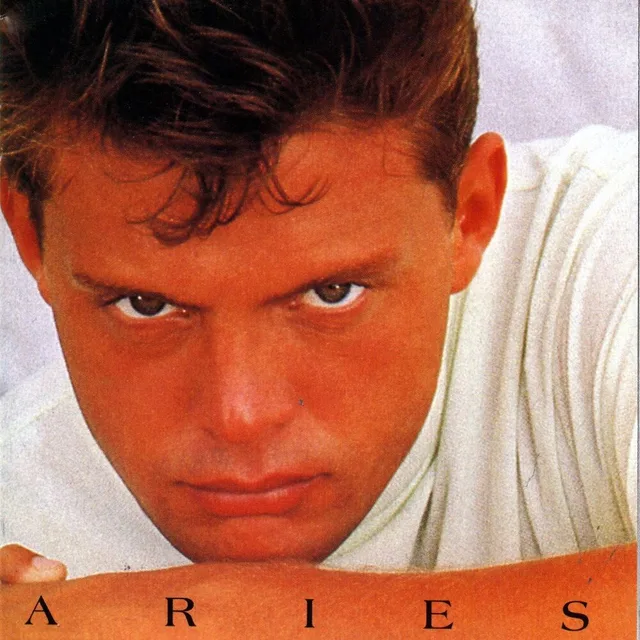
Aries: the melodic renaissance of Luis Miguel between pop ballads and R&B influences
The album poses a question to the listener from its release on June 22, 1993: can one reinvent a crooner without breaking with his own myth? Following the commercial success of Romance (1991), Luis Miguel decided to return to a style close to his beginnings. The production of Aries is characterized by this return to roots, blending pop ballads and dance tracks with R&B influences, far from the collaborations that dominate the current scene. Ten songs form a coherent unit where the lead voice remains the sole protagonist, without featured credits in the available structured sources.
Suave: the pop opener that launches the album
Suave, composed by Kiko Cibrian and Orlando Castro, sounds like an appeal to lightness. It is a popular dance track, an invitation to move, but also an affirmation of Luis Miguel's status as a star capable of transcending genres. This pop opening contrasts with the melancholic seriousness often associated with previous albums, and immediately sets the tone for an album that dares to dance while remaining intimate.
Ayer: the R&B ballad at the heart of the album
"Ayer," written by David Foster, Jeremy Lubbock, and Rudy Pérez, embodies a return to a refined aesthetic where every note is placed with intention. Foster's composition, a renowned songwriter in the 1990s pop Latino landscape, offers melodic richness that aligns perfectly with the R&B arrangements on the album. It is here that Luis Miguel's voice unfolds without restraint, exploring a crooner register where raw emotion yields to controlled elegance. This track demonstrates how the album anchors the artist in his style while integrating modern influences that foreshadowed the renewal of Latin R&B in the following years. Here, their songwriting serves an intimate message: the melody shifts the focus from the singer to deeper introspection, far removed from the usual theatrical flourishes. It is a track that proves the album does not merely repeat the same formulas but explores new melodic territories while retaining this unmistakable signature.
A return to roots after Romance (1991)
But this is not a simple retrospective: the production incorporates R&B influences that give each track a new texture. The arrangements are meticulous, yet they do not seek to mask the lead vocal; on the contrary, they serve the singing by giving it room to breathe. It is this return to roots that makes Aries so relevant: it shows that an artist can evolve without betraying their roots. The album concludes with Tú Y Yo, a composition signed Jorge Calandrelli and Rudy Pérez, which offers a melodic resolution to the record. This closing track reaffirms Luis Miguel's central place in his own narrative, without resorting to external collaborations. Between the two extreme poles of the record, one notes the presence of tracks like Luz Verde or Que Nivel De Mujer, whose respective writings involve Rudy Pérez and Emilio Castillo. These names confirm a creative ecosystem where the Mexican singer works with established composers from the Latin pop scene, such as Francisco Céspedes on Pensar En Ti or Juan Luis Guerra on Hasta Que Me Olvides. The diversity of writers—from Kiko Cibrian to Adrián Posse via David Foster—testifies to a desire for renewal while maintaining stylistic coherence. Aries thus positions itself as a junction point between the artistic maturity achieved after Romance (1991) and the singer's future experiments. It marks not only a return to roots but also the consolidation of a personal repertoire where each track, from Suave to Tú Y Yo, contributes to a carefully crafted sonic architecture. The total duration of the album, though not specified here, unfolds into ten tracks that form a homogeneous set, far removed from the dominant collaborations of today's scene. The sonic architecture of Aries rests on collective writing where each track is the fruit of a precise collaboration between Luis Miguel and confirmed composers from the Latin American landscape. The presence of major figures like David Foster, Jeremy Lubbock, or Juan Luis Guerra in the credits illustrates the international reach of the project upon its 1993 release. These names are not incidental: they testify to a creative ecosystem where the Mexican singer is surrounded by established talents, from Kiko Cibrian to Emilio Castillo, to build a record that functions as a logical sequel to 20 años (1990) while paving the way for future experiments. The production of Aries, released by WEA Latina, Inc., stands out for this desire for stylistic renewal without betraying the crooner's identity. Each track, whether it is a pop ballad or a dancing piece, contributes to a coherent unity where the lead vocal remains the sole protagonist. This approach, far from the external collaborations that dominate today, confirms that the album functions as a junction point between artistic maturity achieved after Romance and upcoming sonic evolutions, consolidating a personal repertoire where each composition marks a step in Luis Miguel's career.
Technical Details
- Release: June 22, 1993 - Label: WEA Latina, Inc. - Tracks: 10 - Opening / Closing: Suave / Tú Y Yo
🎬 The album's music videos
10 clips · continuous playback
Tracks
- 1
- 2
- 3
- 4
- 5
- 6
- 7
- 8
- 9
- 10
🔥 The tracks that are blowing up
Hip-Hop/R&B ranking · week of 12/10/2026
- 1Solar Eclipse— Drake & Don Toliver
- 2Quebec— Drake
- 3I Just Might— Bruno Mars
- 4Cold Shoulder— Drake, Don Toliver & Yebba
- 5Janice STFU— Drake
- 6Dead Fresh— Lil Baby
- 7Classic— Drake
- 8What You Need— Tems
- 9Cinderella— Mac Miller Featuring Ty Dolla $ign
- 10So Good— Jhene Aiko Featuring Kendrick Lamar


