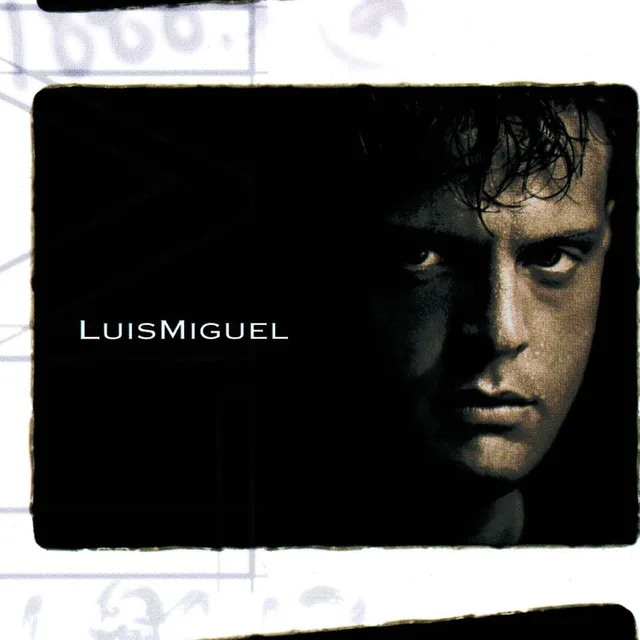
Nada Es Igual (1996): the photography of a transitioning Miguel
Nada Es Igual is not just a studio album; it's an attempt at total reclamation of the creative process. Released under WEA Latina, Inc., this record presents itself as introspection where the voice is once again the absolute center of attention. This opening track serves as a thread: it doesn't merely close a story; it opens the door to a period where Luis Miguel explores his own songwriting.
Si Te Vas: the opening that extends the legacy of Aries
This first track immediately sets the terms of engagement: there is no heavy production, nor a guest star coming to disrupt the main voice. It's the singer and his co-writers who build the sonic space around him. Melancholy settles in from the very first measures, announcing an album where raw emotion takes precedence over spectacle. This opening track serves as a thread: it doesn't merely close a story; it opens the door to a period where Luis Miguel explores his own songwriting, far removed from the collaborations that made his international success.
The Cibrian-Pérez-Lerner core: solo writing centered on the voice
At the heart of the album, it's Kiko Cibrian, Rudy Pérez, and Alejandro Lerner who take over to draw an intimate portrait of the artist. It is here that the record reveals its main strength: it does not seek to impress with instrumental solos or collaborations, but rather with the singer's ability to carry the emotions of each track alone. The voice becomes the only finished product, a work of art in itself, needing no completion by another presence.
Sueña: the orchestral finale signed Stephen Schwartz
The cinematic closing arrives with Sueña, track 10 of the album which offers a striking counterpoint to the intimacy of the preceding songs. It is an editorial choice that allows the record to close not on an intimate note, but on an opening toward another artistic register, that of grand musical spectacle.
Verdict: between personal laboratory and international preparation
Analysis of the credits reveals a musical architecture built around a core trio of composers: Kiko Cibrian, Rudy Pérez, and Alejandro Lerner. It is this trinity that ensures the thematic coherence of the album, transforming it into a personal laboratory. This opening toward other musical universes contrasts intentionally with the intimacy of previous tracks, where Luis Miguel's voice remained the only truly present instrument. This intermediate period corresponds to a moment of transition where Luis Miguel no longer seeks to imitate his predecessors but to refine his own creative identity. The complete absence of credited features in the structural sources reinforces this vision of an artist working in autarky, building his sonic universe without relying on external collaborations. The album's composition is enriched by external contributions that expand the sonic palette beyond the Cibrian-Pérez-Lerner core. Tracks Abrázame and Dame integrate respectively the penwork of Mark Portmann and Alejandro Lerner, while Todo Por Su Amor calls upon M. Lopez and Rudy Pérez. This diversity of authors confirms that the album does not rest solely on a fixed trio but draws from a wider network of composers. The integration of Stephen Schwartz as co-writer of the final track Sueña marks a major stylistic rupture, anchoring the end of the album in a Hollywood and cinematic musical register. This American presence contrasts with the Latin American names that dominate the rest of the credits, validating the hypothesis of an intent to transcend geographical boundaries while maintaining thematic coherence. The complete absence of credited vocal features reinforces the idea that this album functions as a personal laboratory where Luis Miguel explores his own writing, even when he relies on external composers. Although unknown in total duration, the album is structured by this alternation between intimate introspection and opening toward other musical universes, making Nada Es Igual a pivotal work in the artist's discography. Nada Es Igual thus emerges as a pivotal work in Luis Miguel's career, halfway between the conceptual album of Aries (1993) and the more melodic return to roots of Romance (1991). This ten-track album functions as an echo chamber where the artist refines his own creative identity, far removed from external collaborations that made him successful. The solo production, co-signed writings with Kiko Cibrian, Rudy Pérez, and Alejandro Lerner, plus the final collaboration with Stephen Schwartz, sketch a portrait of an artist who does not merely repeat past successes but seeks to renew his artistic approach.
Technical Specifications
- Release: August 20, 1996 - Label: WEA Latina, Inc. - Tracks: 10 - Opening / Closing: "Si Te Vas" / "Sueña"
🎬 The album's music videos
10 clips · continuous playback
Tracks
- 1
- 2
- 3
- 4
- 5
- 6
- 7
- 8
- 9
- 10
🔥 The tracks that are blowing up
Hip-Hop/R&B ranking · week of 12/10/2026
- 1Solar Eclipse— Drake & Don Toliver
- 2Quebec— Drake
- 3I Just Might— Bruno Mars
- 4Cold Shoulder— Drake, Don Toliver & Yebba
- 5Janice STFU— Drake
- 6Dead Fresh— Lil Baby
- 7Classic— Drake
- 8What You Need— Tems
- 9Cinderella— Mac Miller Featuring Ty Dolla $ign
- 10So Good— Jhene Aiko Featuring Kendrick Lamar