
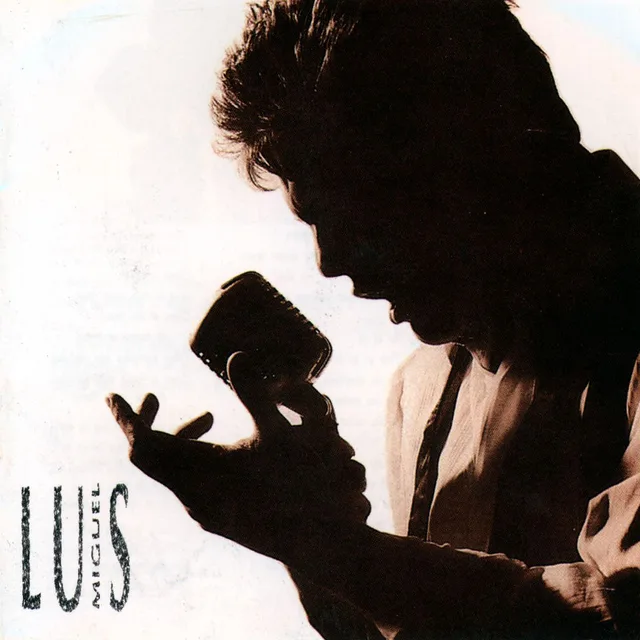
Romance is the eighth studio album by Luis Miguel, released by WEA Latina on November 19, 1991. Behind a facade of pure gold and astronomical figures, this record turns out to be an architecture built in solitude: after Juan Carlos Calderón had to abandon his initial composition mission, Armando Manzanero became the main architect of a work where Miguel's voice alone bears the weight of every melody.
The Failed Collaboration That Forged the Artistic Strength of Romance
The story of Romance begins with a failed collaboration that ultimately became its greatest artistic strength. The production initially planned as another co-production with Juan Carlos Calderón collapsed when he was unable to compose the necessary songs, forcing the project into a brutal pivot toward pure introspection. This rupture transformed what could have been a group album into a solitary portrait of an artist confronting his own pain.
No Me Platiques Mas: The Melancholic and Stripped-Down Opening Track
The album opens with No Me Platiques Mas, composed by Vicente Garrido, a track that immediately establishes an atmosphere of emotional exhaustion without resorting to massive orchestration. This introductory piece functions like an open window onto an abandoned apartment, where Miguel's voice echoes alone in empty space. Far from the orchestral cathedrals of previous albums such as Directo al corazón (1982), this opening chooses the raw intimacy of a stripped-down bolero that announces the register the album will traverse: a sad elegance, devoid of superfluity, where every syllable bears the weight of a confession.
Te Extraño and the stylistic shift toward intimate singing
It is at the heart of the record that the figure of Armando Manzanero takes on its full relief. On Te Extraño, composed by Armando Manzanero in 1968, he appears as the songwriter who gives Miguel a new voice: that of a man no longer seeking to impress but to expose his wounds with surgical clarity. This track embodies the stylistic mutation of the Mexican singer, moving from theatrical performance to intimate singing where every note is placed like a clue in the riddle of a lost relationship. Manzanero's presence here is not simply a producer credit; it is the intervention of a master who transforms the bolero into an intimate journal, creating a sonic space where the voice becomes the only instrument necessary to tell a broken love story.
Legacy and a Decisive Turning Point in Luis Miguel's Career
Romance is far more than just a compilation of boleros: it is a precise snapshot of an artist in transition, caught between the end of one era and the beginning of a new series that would last until Segundo Romance (1994). The album marked a turning point in Luis Miguel's career, proving that introspection could coexist with massive commercial success. His legacy lies in this fragile alchemy where the failure of an international collaboration gave birth to an intimate work that has become an absolute reference for romantic boleros—a record that continues to sell millions of copies because it speaks to every generation about a lost love without ever seeking to resolve it.
Technical Details
- Release: November 19, 1991 - Label: wea - Tracks: 12 - Opening / Closing: No Me Platiques Mas (1954) / Cómo (1967)
🎬 The album's music videos
12 clips · continuous playback
Tracks
- 1
- 2
- 3
- 4
- 5
- 6
- 7
- 8
- 9
- 10
- 11
- 12
🔥 The tracks that are blowing up
Hip-Hop/R&B ranking · week of 12/10/2026
- 1Solar Eclipse— Drake & Don Toliver
- 2Quebec— Drake
- 3I Just Might— Bruno Mars
- 4Cold Shoulder— Drake, Don Toliver & Yebba
- 5Janice STFU— Drake
- 6Dead Fresh— Lil Baby
- 7Classic— Drake
- 8What You Need— Tems
- 9Cinderella— Mac Miller Featuring Ty Dolla $ign
- 10So Good— Jhene Aiko Featuring Kendrick Lamar


